Destination guide
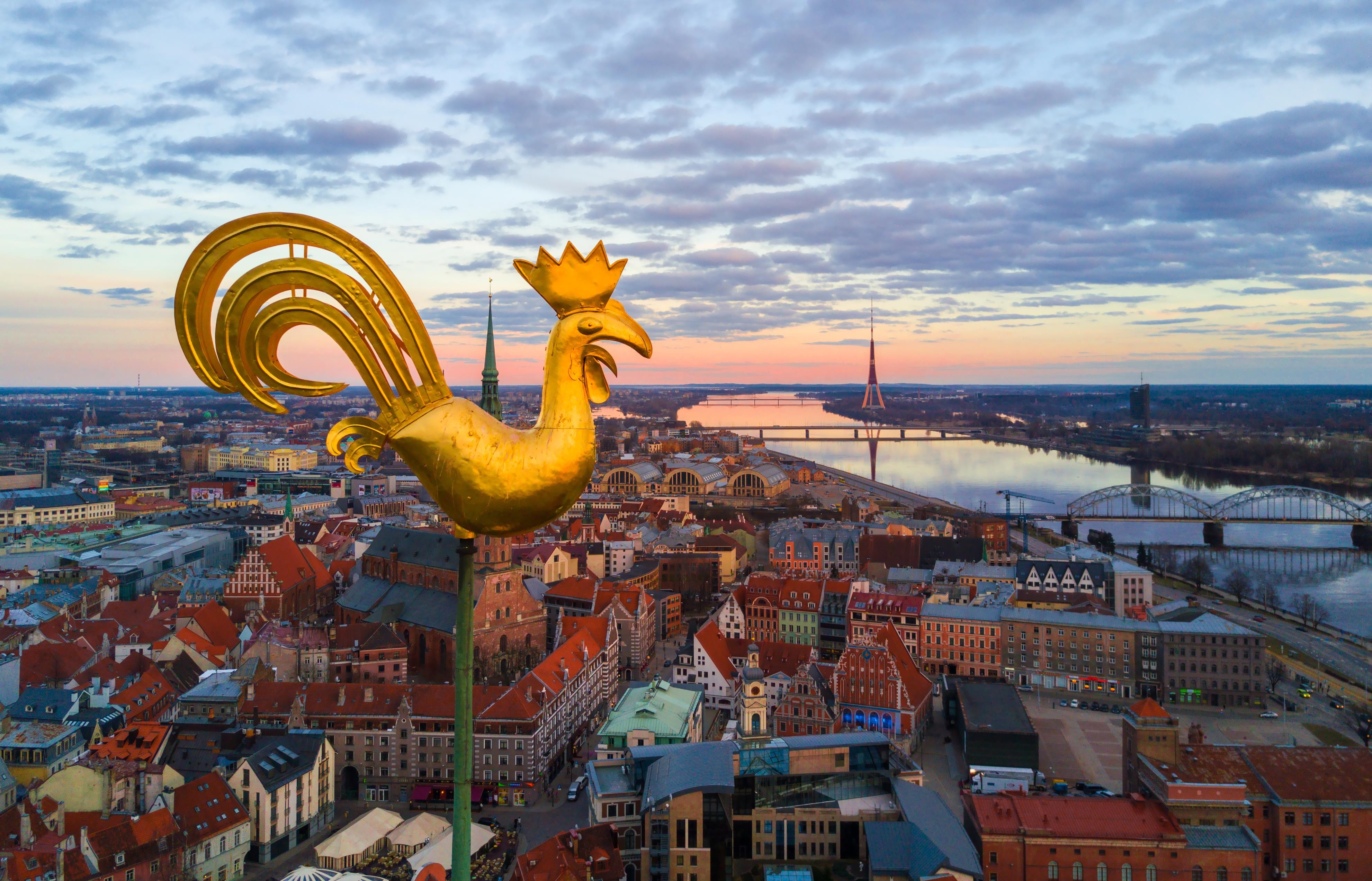
Riga ( REE-gə), officially Riga State City (Latvian: Rīgas valstspilsēta), is the capital, primate, and largest city of Latvia and the second most-populous city in the Baltics. Home to 588,911 inhabitants (as of 2026), the city accounts for a third of Latvia's total population. The population of Riga metropolitan area, which stretches beyond the city limits, is estimated at 847,162 (as of 2025). The city lies on the Gulf of Riga at the mouth of the Daugava river where it meets the Baltic Sea. Riga's territory covers 307.17 km2 (118.60 sq mi) and lies 1–10 m (3–33 ft) above sea level on a flat and sandy plain.
Riga was founded in 1201, and is a former Hanseatic League member. Riga's historical centre is a UNESCO World Heritage Site, noted for its Art Nouveau architecture and 19th century wooden architecture. Riga was the European Capital of Culture in 2014, along with Umeå in Sweden. Riga hosted the 2006 NATO Summit, the Eurovision Song Contest 2003, the 2013 World Women's Curling Championship, and the IIHF Men's World Ice Hockey Championships in 2006, 2021, and 2023. It is home to the European Union's office of European Regulators for Electronic Communications (BEREC). In 2017, it was named as the European Region of Gastronomy.
In 2019, Riga received over 1.4 million foreign visitors. The city is served by Riga International Airport, the largest and busiest airport in the Baltic States. Riga is a member of Eurocities, the Union of the Baltic Cities (UBC), and Union of Capitals of the European Union (UCEU).
Etymology
The precise origin of the name is unknown; however, there are numerous and speculative theories for the origin of the name Riga:
It could be derived from Riege, the German name for the River Rīdzene, a former tributary of the Daugava.
Bishop Albert...
Source and contributor history: Wikipedia ·
CC BY-SA 4.0 ·
Shortened from the original; imported automatically without editorial review. 2026-11-19 03:27:00 UTC
Places to visit and practical information
Riga is one of the leading travel destinations in the Baltic region in terms of overnight stays by foreign visitors. In 2024, the city welcomed over 1.1 million international tourists.
Summer remains the peak season for tourism in Riga, however, it's also seeing a growing influx of visitors in December, largely due to the city's transformation into a festive destination during the holiday season. The Riga Christmas Market, located in the Old Town of Riga, serves as a key attraction during the Christmas period.
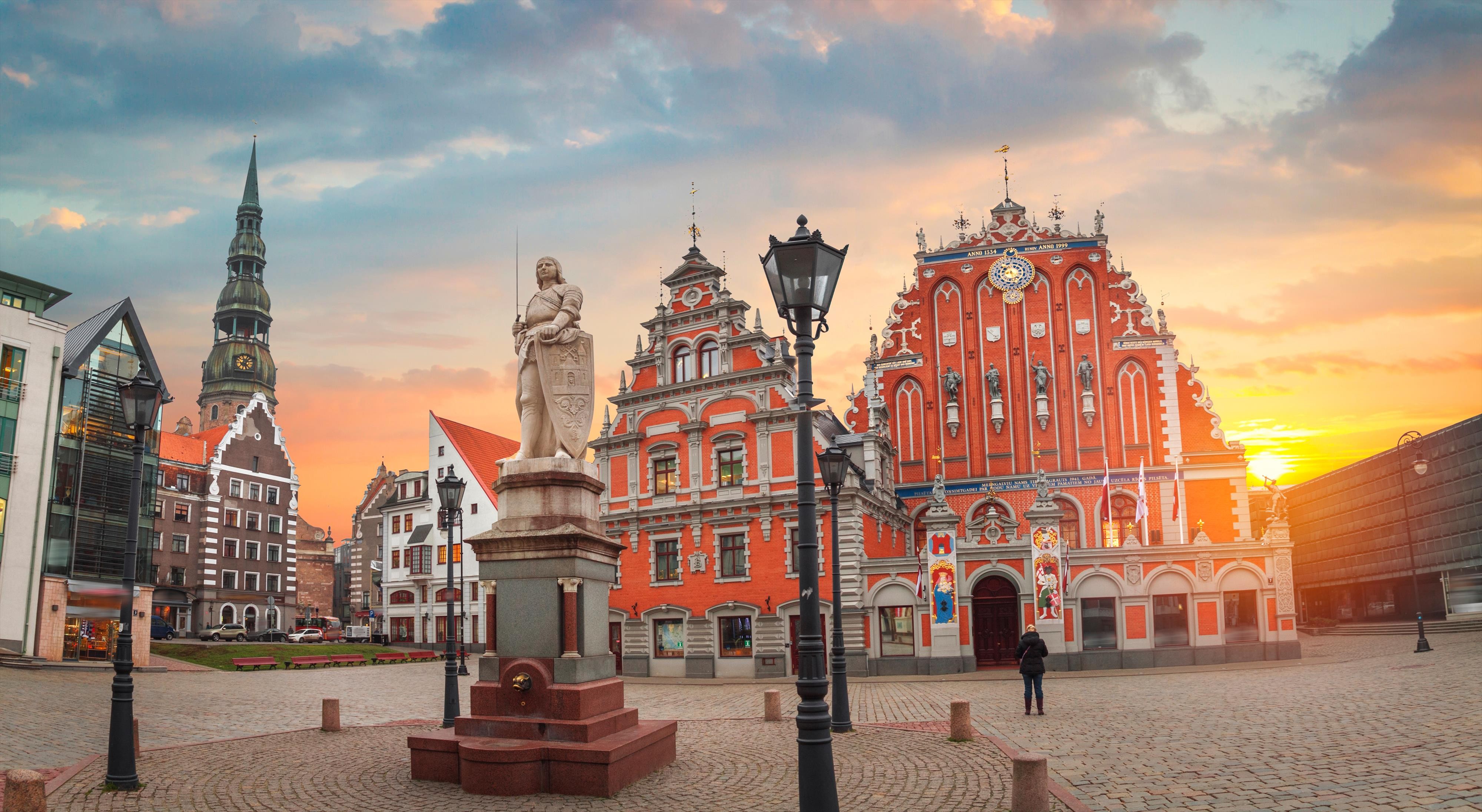
The most popular attractions include the Riga Zoo, House of the Blackheads, Riga Central Market, the Latvian National Museum of Art and the Latvian National Museum of Natural History, as well as its historic Old Town and the Art Nouveau architecture found in high concentration the centre of the city.
In addition to leisure tourism, Riga serves as a significant venue for international trade fairs and exhibitions. The city hosts a variety of annual events across sectors such as technology, agriculture, and business.
Culture
Theatres
The Latvian National Opera was founded in 1918. The repertoire of the theatre embraces all opera masterpieces. Housed in a neoclassical building completed in 1863, it has become one of Riga's landmarks. The Latvian National Opera is famous not only for its operas, but for its ballet troupe as well.
The Latvian National Theatre, founded in 1919, is renowned for preserving the traditions of Latvian drama. It is one of the biggest theatres in Latvia and is also notable as the site where Latvia declared its independence in 1918.
The Mikhail Chekhov Riga Russian Theatre is the oldest professional drama theatre in Latvia, established in 1883. The repertoire of the theatre includes classical plays and experimental performances of Russian and other foreign playwrights.
The Daile Theatre was opened for the first time in 1920. It is one of the most successful theatres in Latvia and is distinguished by its frequent productions of modern foreign plays. It's also known for the building it's housed in, which is considered as one of the most important examples of modernist architecture in Riga.
The Latvian Puppet Theatre was founded in...
Source and contributor history: Wikipedia ·
CC BY-SA 4.0 ·
Shortened from the original; imported automatically without editorial review. 2026-11-19 03:27:00 UTC
Weather throughout the year
The climate of Riga is humid continental (Köppen Dfb). The coldest months are January and February, when the average temperature is −2.1 °C (28 °F) but temperatures as low as −20 to −25 °C (−4 to −13 °F) can be observed almost every year on the coldest days. The proximity of the sea causes frequent autumn rains and fogs. Continuous snow cover may last eighty days. The summers in Riga are mild and rainy with an average temperature of 18 °C (64 °F), while the temperature on the hottest days can exceed 30 °C (86 °F).
Government
The head of the city government of Riga (the Government of the State City of Riga, Latvian: Rīgas valstspilsētas pašvaldība) is the mayor (mērs), or officially the Chairman of the Riga State City Council (Latvian: Rīgas valstspilsētas domes priekšsēdētājs). The mayor is elected by the city council. The mayor is assisted by one or more Vice Mayors (deputy mayors).
The current mayor since 27 June 2025 is Viesturs Kleinbergs from The Progressives party. He leads a coalition of The Progressives, the National Alliance party, the New Unity alliance (their faction includes members of Movement For! party) and the United List alliance.
The city council is a democratically elected institution and is the final decision-making authority in the city. The Council consists of 60 members or deputies who are elected every four years. The Presidium of the Riga City Council consists of the Chairman of the Riga City Council and the representatives delegated by the political parties, alliances or electoral blocks elected to the City Council. The electoral list that surpass the 5% threshold then form according factions in the council.
From February to October 2020, the offices of the Mayor and Vice Mayors were suspended and the council itself had been dissolved and replaced by an interim administration of representatives from three governmental ministries until snap elections were held in 2020.
Demographics
With 591,882 inhabitants in 2025, Riga is one of the largest cities in the Baltic states, though its population has decreased from just over 900,000 in 1991 and the population of Vilnius has just outnumbered that of Riga. Notable causes include...
Source and contributor history: Wikipedia ·
CC BY-SA 4.0 ·
Shortened from the original; imported automatically without editorial review. 2026-11-19 03:27:00 UTC
Weather throughout the year
Historical monthly average of daily high temperatures and daily precipitation, not a forecast. NASA POWER data for the stated point; conditions elsewhere can differ.
Symbols indicate freezing mean temperature and precipitation, not sunshine or actual snowfall.
Reference location: Riga (56.947500, 24.106944)
| Month | Average daily high (°C) | Mean precipitation (mm/day) |
|---|
| 1 | ❄ -2,5 | 💧 1,9 |
|---|
| 2 | ❄ -2,0 | 💧 1,7 |
|---|
| 3 | 🌡 2,8 | 💧 1,5 |
|---|
| 4 | 🌡 9,5 | 💧 1,6 |
|---|
| 5 | 🌡 15,5 | 💧 1,7 |
|---|
| 6 | 🌡 19,2 | 💧 2,5 |
|---|
| 7 | 🌡 21,9 | 💧 2,7 |
|---|
| 8 | 🌡 21,1 | 💧 2,6 |
|---|
| 9 | 🌡 16,9 | 💧 2,0 |
|---|
| 10 | 🌡 9,9 | 💧 2,5 |
|---|
| 11 | 🌡 4,0 | 💧 2,5 |
|---|
| 12 | ❄ -0,2 | 💧 2,0 |
|---|
Riga · NASA POWER · 25-year Meteorological and Solar Monthly & Annual Climatologies (January 2001 - December 2025) · Average daily high (°C) 2001–2025 · 2026-11-19 03:27:38 UTC
Travel costs
Food and non-alcoholic beverage price comparison for 2024: index 105,4 (EU average = 100). This is a historical price-level comparison, not a grocery basket price, daily budget or current prices.
Eurostat · prc_ppp_ind · 2025-07-10T11:00:00+0200 · Retrieved: 2026-11-19 03:17:28 UTC
A comparable reference-city grocery basket is not available yet.
Indicative observations: each source specifies a reference city or country. USD as supplied by the sources; prices vary. Some items and further independent sources remain unavailable.
| Item | Price and date |
|---|
| Water 1.5 L |
Unverified |
|---|
| Inexpensive restaurant meal |
Unverified |
|---|
| Cappuccino |
Unverified |
|---|
| Domestic beer 0.5 L |
Unverified |
|---|
| Croissant or doughnut |
Unverified |
|---|
| Big Mac |
Unverified |
|---|
| Serving of ice cream |
Unverified |
|---|
The total and local-budget filter require all seven verified prices for the same location and currency; some are missing.
A comparable daily per-person budget has not been verified yet. A package price does not indicate local meal, transport and other expenses.
Open the travel guide — Wikivoyage (EN): Food and restaurants
Latvian cuisine is typical of the Baltic region and, in general, of northern countries, and especially similar to Finnish cuisine (see Nordic cuisine). It's high in butter and fat while staying low on spices except for black pepper, dill or grains/seeds, such as caraway seeds. If you are from the Mediterranean, you might find the food rather bland, but if you come from England or the Midwestern U.S., you will probably not have any trouble getting used to most of the dishes.
Latvian cuisine originated from peasant culture and is strongly based on crops that grow in Latvia's maritime, temperate climate. Latvian cuisine offers plenty of varieties of bread and milk products, which are staples. Pork products, potatoes, rye or wheat, oats, peas, beets, cabbage are the staples. Meat, especially pork, features in most main meal dishes. Sometimes even some meatless dishes can be cooked using bacon fat. But fish also is commonly consumed due to Latvia's location on the east coast of the Baltic Sea and Livonian heritage: smoked and raw fish are quite common.
For more information on cuisine of Kurzeme and Livonians, see the Kurzeme article.
Source and contributor history · CC BY-SA 4.0 · Shortened from the original; imported automatically without editorial review.
Open the travel guide — Wikivoyage (EN): Accommodation
Although you might not find plenty of 5 star hotels all around Latvia, you will find comfortable places to stay for reasonable prices. There are many hotels to choose from and the prices generally start with €30 outside of Riga and €60 in Riga.
A small network of youth hostels also exists. Dormitory rooms are around €10-15 while single and double rooms are €30 and above.
So-called guest houses or country houses, some on farms, are a great place to stay at the countryside. They usually cost much less than hotels and are of much better quality than hostels due to the limited number of guests and the personalized service. Such houses are usually run by families and will come with full amenities with some even following the hotel star ratings. These usually provide many recreational activities such as the Latvian popular sauna (pirts) and horseback rides. You can ask your hosts regarding popular attractions available nearby, what sights are worth visiting and whether some events are taking place at that time that they would suggest visiting. Keep in mind, you will not be able to simply "drop in" usually and will be required to plan ahead, contacting the guest house in question a day or few before arrival. This can depend on the specific place. Guest houses can generally be found fairly frequently throughout the countryside and are often listed on tourist booklets.
Latvian rural tourism association, Lauku ceļotājs has published catalogs and maps that list various types of accommodation mixed with content such as cultural heritage sites and nature parks. The publications can be downloaded online or in an association office in Riga.
Accommodations may give a discount, if you book with them directly (e.g. phone or their website) instead of using online middle-men services. This is due to the reason that most accommodations in Latvia can be booked without credit card anyway. So, there is no real guarantee that someone does turn up. Just that via phone owners are at least not stuck with an online fee without receiving the room rent.
Source and contributor history · CC BY-SA 4.0 · Shortened from the original; imported automatically without editorial review.
Open the travel guide — Wikivoyage (EN): Introduction and places to visit
Latvia (Latvian: Latvija) is one of the three Baltic states in Europe. The biggest travel destination in the country is the capital Riga, whose Old Town is a World Heritage Site. There are many other great places to see, both urban and rural. Latvia's unspoilt sea coast is a 500-km-long unique biome, mainly consisting of empty beaches, white soft sand, and dunes covered with pine trees. Forests cover approximately half of Latvia's territory and are home to many nature trails, nature parks and wildlife preserves. The city of Liepāja with its magnificent beach and the unique formerly secret military neighbourhood of Karosta, Kuldīga, recognised in 2023 as a UNESCO world heritage site, with Europe's widest waterfall, and Cēsis with its medieval castle ruins are just some of the various sights.
== Regions ==
There are various official and unofficial ways in which the country's divided into regions. Most commonly, Vidzeme, Kurzeme, Zemgale and Latgale are separated as the major regions. Riga, which is otherwise considered part of Vidzeme, is often split off in a separate region either by city boundaries or by the boundaries of the Riga Planning Region, which includes a larger surrounding area.
Although the social and cultural differences between the regions of Latvia are not large, they still exist. An example of that is the Latgale region, which was separated from the rest of Latvian regions for several centuries by border, culturally, religiously and language-wise.
Most locals will assume the city of Riga, along with the suburbs, is being talked about instead of the greater official planning region when the Riga Region is mentioned.
== Cities ==
1 Riga – The capital city of Latvia and the European Capital of Culture in 2014 with a long history.
2 Sigulda – A town in central Latvia with two interesting castles and historic points of interest. Probably the most popular destination outside of Riga for foreign tourists, also due to its closeness.
3 Cēsis – One of the...
Source and contributor history · CC BY-SA 4.0 · Shortened from the original; imported automatically without editorial review.