Destination guide
Lithuania, officially the Republic of Lithuania, is a country in the Baltic region of Europe. It is one of three Baltic states and lies on the eastern shore of the Baltic Sea, bordered by Latvia to the north, Belarus to the east and south, Poland to the south, and the Russian semi-exclave of Kaliningrad Oblast to the southwest, with a maritime border with Sweden to the west. Lithuania covers an area of 65,300 km2 (25,200 sq mi), and has a population of 2.9 million. Its capital and largest city is Vilnius; other major cities include Kaunas, Klaipėda, Šiauliai and Panevėžys. Lithuanians are the titular nation, belong to the ethnolinguistic group of Balts, and speak Lithuanian.
For millennia, the southeastern shores of the Baltic Sea were inhabited by various Baltic tribes. In the 1230s, Lithuanian lands were united for the first time by Mindaugas, who formed the Kingdom of Lithuania on 6 July 1253. Subsequent expansion and consolidation resulted in the Grand Duchy of Lithuania, which by the 14th century was the largest country in Europe. In 1386, the grand duchy entered into a de facto personal union with the Crown of the Kingdom of Poland. The two realms were united into the Polish-Lithuanian Commonwealth in 1569, forming one of the largest and most prosperous states in Europe. The commonwealth lasted more than two centuries, until neighbouring countries gradually dismantled it between 1772 and 1795, with the Russian Empire annexing most of Lithuania's territory.
Towards the end of World War I, Lithuania declared independence in 1918, founding the modern Republic of Lithuania. In World War II, Lithuania was occupied by the Soviet Union, then by Nazi Germany, before being reoccupied by the Soviets in 1944. Lithuanian armed resistance to the Soviet occupation lasted until...
Source and contributor history: Wikipedia ·
CC BY-SA 4.0 ·
Shortened from the original; imported automatically without editorial review. 2026-11-19 03:26:51 UTC
Places to visit and practical information
Statistics from 2023 showed 1.4 million tourists from foreign countries visited Lithuania and spent at least one night. The largest number of tourists came from Poland (173,500), Latvia (144,300), Belarus (141,900), Germany (127,400), the United Kingdom (74,200), the United States (69,700), Ukraine (67,000), and Estonia (61,300).
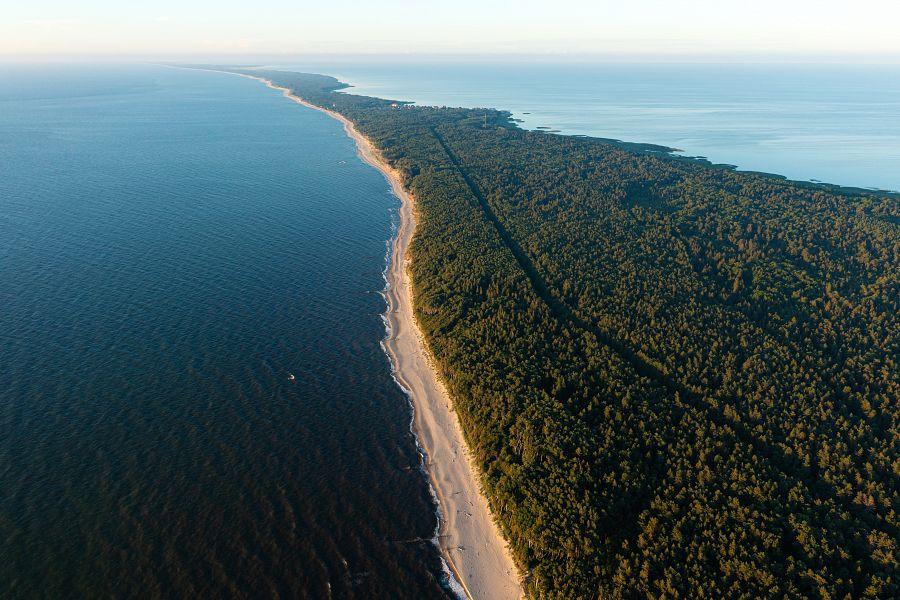
Domestic tourism has been on the rise as well. Currently there are up to 1000 places of attraction in Lithuania. Most tourists visit the big cities—Vilnius, Klaipėda, and Kaunas, seaside resorts, such as Neringa, Palanga, and Spa towns – Druskininkai, Birštonas.
Hot air ballooning is popular, especially in Vilnius and Trakai. Bicycle tourism is growing, especially the Lithuanian Seaside Cycle Route. EuroVelo routes EV10, EV11, EV13 go through Lithuania. The total length of bicycle tracks amounts to 3769 km (of which 1988 km is asphalt pavement). Nemunas Delta Regional Park and Žuvintas biosphere reserve are known for birdwatching.
The total contribution of tourism to GDP had been forecast to rise to €3.2 billion, 7% of GDP by 2027, but has decreased to €1.7 billion, 2.3% of GDP in 2023, although it is rising post COVID-19 pandemic.
Communication
Lithuania has a well developed communications infrastructure. The country has 2.8 million citizens and 5 million SIM cards. The largest LTE (4G) mobile network covers 97% of Lithuania's territory. Usage of fixed phone lines has been rapidly decreasing due to rapid expansion of mobile-cellular services. In 2017, Lithuania was top 30 in the world by average mobile broadband speeds and top 20 by average fixed broadband speeds.
Lithuania was also top 7 in 2017 in the List of countries by 4G LTE penetration. In 2016, Lithuania was ranked 17th in United Nations' e-participation index. There are four TIER III datacenters in Lithuania.
Lithuania is 44th globally ranked country on data center density according to Cloudscene.
Development of Rural Areas Broadband Network (RAIN) was started with the objective to provide residents, state and municipal authorities and businesses with fibre-optic broadband access in rural areas. RAIN infrastructure allows 51 communications operators to provide network...
Source and contributor history: Wikipedia ·
CC BY-SA 4.0 ·
Shortened from the original; imported automatically without editorial review. 2026-11-19 03:26:51 UTC
Weather throughout the year
Lithuania has a temperate climate with both maritime and continental influences. It is defined as humid continental (Dfb) under the Köppen climate classification (but is close to oceanic in a narrow coastal zone).
Average temperatures on the coast are −2.5 °C (27.5 °F) in January and 16 °C (61 °F) in July. In Vilnius, the average temperatures are −6 °C (21 °F) in January and 17 °C (63 °F) in July. During the summer, 20 °C (68 °F) is common during the day, while 14 °C (57 °F) is common at night; in the past, temperatures have reached as high as 30 or 35 °C (86 or 95 °F). Some winters can be very cold. −20 °C (−4 °F) occurs almost every winter. Winter extremes are −34 °C (−29 °F) in coastal areas and −43 °C (−45 °F) in the east.
The average annual precipitation is 800 mm (31.5 in) on the coast, 900 mm (35.4 in) in the Samogitia highlands, and 600 mm (23.6 in) in the east. Snow occurs every year, and it can snow from October to April. In some years, sleet can fall in September or May. The growing season lasts 202 days in the western part of the country and 169 days in the eastern part. Severe storms are rare in the east but common in the coastal areas. Lithuania experienced a drought in 2002, causing forest and peat bog fires.
Biodiversity and conservation
The Aplinkos apsaugos įstatymas (Environmental Protection Act) was adopted in 1992. The law provides the foundations for regulating social relations in the field of environmental protection, establishes the basic rights and obligations of legal and natural persons in preserving the biodiversity, ecological systems, and the landscape. Lithuania agreed to cut carbon emissions by at least 20% of 1990 levels by 2020 and by at least 40% by 2030, together with all European Union members. Also, by 2020 at least 20% (27% by 2030) of the country's total energy consumption should be from the renewable energy sources. In 2016, Lithuania introduced especially effective container deposit legislation, which resulted in collecting 92% of all packagings in 2017.
Lithuania does not have high mountains, and its landscape is dominated by blooming meadows, dense forests and fertile fields of cereals. However, it stands out by...
Source and contributor history: Wikipedia ·
CC BY-SA 4.0 ·
Shortened from the original; imported automatically without editorial review. 2026-11-19 03:26:51 UTC
Weather throughout the year
Historical monthly average of daily high temperatures and daily precipitation, not a forecast. NASA POWER data for the stated point; conditions elsewhere can differ.
Symbols indicate freezing mean temperature and precipitation, not sunshine or actual snowfall.
Reference location: Vilnius (54.687222, 25.280000)
| Month | Average daily high (°C) | Mean precipitation (mm/day) |
|---|
| 1 | ❄ -3,4 | 💧 1,7 |
|---|
| 2 | ❄ -1,8 | 💧 1,5 |
|---|
| 3 | 🌡 4,2 | 💧 1,4 |
|---|
| 4 | 🌡 11,7 | 💧 1,5 |
|---|
| 5 | 🌡 17,4 | 💧 2,3 |
|---|
| 6 | 🌡 21,0 | 💧 2,6 |
|---|
| 7 | 🌡 23,2 | 💧 3,2 |
|---|
| 8 | 🌡 22,9 | 💧 2,7 |
|---|
| 9 | 🌡 18,0 | 💧 1,8 |
|---|
| 10 | 🌡 10,5 | 💧 2,2 |
|---|
| 11 | 🌡 3,8 | 💧 1,9 |
|---|
| 12 | ❄ -1,3 | 💧 1,8 |
|---|
Vilnius · NASA POWER · 25-year Meteorological and Solar Monthly & Annual Climatologies (January 2001 - December 2025) · Average daily high (°C) 2001–2025 · 2026-11-19 03:27:36 UTC
Travel costs
Food and non-alcoholic beverage price comparison for 2024: index 101,2 (EU average = 100). This is a historical price-level comparison, not a grocery basket price, daily budget or current prices.
Eurostat · prc_ppp_ind · 2025-07-10T11:00:00+0200 · Retrieved: 2026-11-19 03:17:28 UTC
A comparable reference-city grocery basket is not available yet.
Indicative observations: each source specifies a reference city or country. USD as supplied by the sources; prices vary. Some items and further independent sources remain unavailable.
| Item | Price and date |
|---|
| Water 1.5 L |
Unverified |
|---|
| Inexpensive restaurant meal |
Unverified |
|---|
| Cappuccino |
Unverified |
|---|
| Domestic beer 0.5 L |
Unverified |
|---|
| Croissant or doughnut |
Unverified |
|---|
| Big Mac |
Unverified |
|---|
| Serving of ice cream |
Unverified |
|---|
The total and local-budget filter require all seven verified prices for the same location and currency; some are missing.
A comparable daily per-person budget has not been verified yet. A package price does not indicate local meal, transport and other expenses.
Open the travel guide — Wikivoyage (EN): Food and restaurants
Lithuanians like their meat, and eagerly consume all parts of the pig - this partly symbolises escape from repressive impoverished times. Vegetarians and vegans should do okay in Vilnius and Kaunas but may struggle elsewhere, and there's not much in the way of international cuisine, since Lithuania never drew in the overseas workforce, cultures and cuisines that you encounter in the west.
If you're given a menu in English or German, take a glance at the Lithuanian version in case it offers lower prices.
Appetisers: Piršteliai prie alaus are thin, rolled-up puff pastries served with beer. Soups include Šaltibarščiai a summer soup based on beets and soured milk, Juka (blood soup), or Cabbage soup flavoured with carrots, ham, onions. Ruginė duona - dark rye bread - goes well with soup.
Cepelinai (Zeppelins) are potato dumplings with meat. Vėdarai is sausage, a potato-stuffed pig intestine. Skilandis is pig's stomach stuffed with ground meat and garlic, cold-smoked. Plokštainis, or kugelis, is an oven-baked serving of potatoes. Bulviniai blynai are grated potato pancakes with different sauces. Virtinukai are curd patties. Kastinys is soft sour cream butter. Šaltnosiukai are dumplings filled with lingon berry.
Fish (pike or perch) may be baked whole or stuffed, or made into gefilte fish. Silkė is herring, marinated, baked, fried or served in aspic.
Wild berries, mushrooms and cheese are common ingredients, and honey and poppy seeds are commonly used as filling in pastries. For desserts, try Žagarėliai - curly, thin deep-fried pastries dusted with powdered sugar - or Spurgos, doughnuts, often filled with jam.
Source and contributor history · CC BY-SA 4.0 · Shortened from the original; imported automatically without editorial review.
Open the travel guide — Wikivoyage (EN): Accommodation
Vilnius has by far the best selection in all price categories, and Kaunas has a good selection. Since it's a small country, you can base there and day-trip most places.
Viešbutis is the word for a hotel and the larger provincial towns have one or two, see individual pages. They're mostly aimed at business travellers and are clean and modern.
"Staying with grandmother" means renting someone's spare room, though grandmother has probably been shunted elsewhere to free up more lucrative space. The countryside is dotted with self-catering lets and these pages don't attempt to list them, but they show up on Google Maps. Countryside.lt is a third-party website that catalogues them.
Source and contributor history · CC BY-SA 4.0 · Shortened from the original; imported automatically without editorial review.
Open the travel guide — Wikivoyage (EN): Introduction and places to visit
Lithuania (Lithuanian: Lietuva) is one of the three Baltic states of northeast Europe. It's a low-lying, mostly agricultural country bordered by Latvia to the north and east, Belarus to the south, Poland to the southwest, Kaliningrad exclave of Russia to the west, and the Baltic Sea to the northwest. It broke away from the Soviet Union to become an independent republic in 1990, soon followed by Latvia and Estonia, the other two Baltic states. It is the largest of the three Baltic states, extending to about 65,300 square kilometres with a population of 2.9 million in 2025.
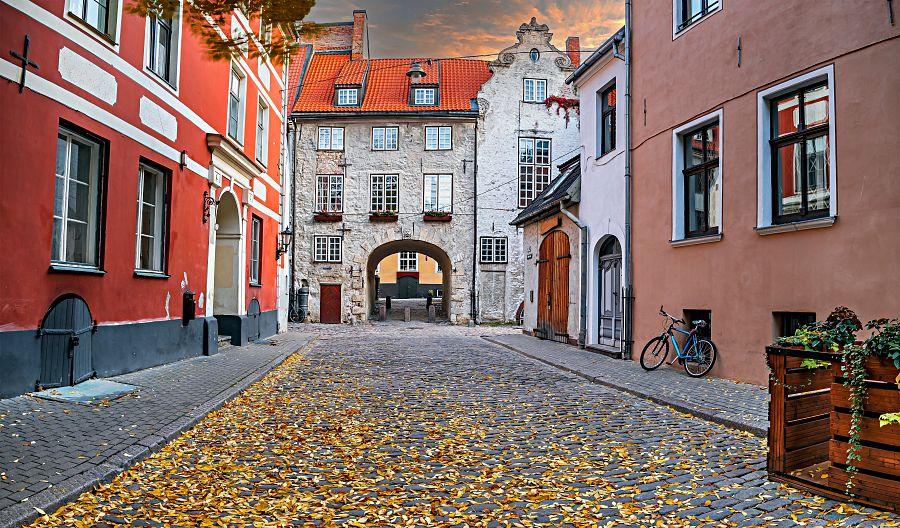
Vilnius, the capital, is the country's star attraction. Beyond is a compact yet diverse country of modern cities, unique small towns, traditional villages, forests, castles, manors, churches, lakes, rivers, hillforts and strange sculptures and monuments attesting to its pagan past.
== Regions ==
Administratively, Lithuania is divided into 10 counties (apskritys) and 60 municipalities (savivaldybės). However, for travel and cultural purposes it's considered to have five "ethnographic regions":
== Cities ==
1 Vilnius — The must-see capital has a gorgeous old town lined with gothic, renaissance, baroque and neoclassical buildings. The country's best museums, hotels and eating places are located here.
2 Trakai — 28 km west of Vilnius, popular for its picture-perfect castle surrounded by a lake.
3 Kaunas — The second largest city, has interwar modernist architecture and a compact old town. National sports events are staged here.
4 Klaipėda — The country's only port, so much is industrial, but with a distinctive half-timbered old town. Popular for its annual Sea Festival.
5 Šiauliai — Several museums, sculptures and old churches can be found here, but it's best known for the "Hill of Crosses" 12 km north.
6 Panevėžys — Drably industrial, but has museums, churches and a heritage narrow-gauge railway.
7 Alytus — Generally only of interest to refrigerator manufacturers, but is a base for exploring...
Source and contributor history · CC BY-SA 4.0 · Shortened from the original; imported automatically without editorial review.