Destination guide
Romania is a country in Central and Southeastern Europe. It lies on the lower course of the Danube, north of the Balkan Peninsula, and on the northwestern shore of the Black Sea. It borders Ukraine to the north and east, Hungary to the west, Serbia to the southwest, Bulgaria to the south, Moldova to the east, and the Black Sea to the southeast. It is the twelfth-largest country in Europe by area, covering 238,397 km2 (92,046 mi2), and the sixth-most populous member state of the European Union, with 19 million inhabitants. The capital, largest city and economic centre is Bucharest. Other major cities include Cluj-Napoca, Iași, Constanța, Timișoara, Brașov and Craiova.
Romania was settled during the Lower Paleolithic. In antiquity its territory was inhabited by the Dacians. Part of it became the Roman province of Dacia after Trajan's Dacian Wars, beginning the process of Romanisation. The modern Romanian state was formed in 1859 through the unification of Moldavia and Wallachia under Alexandru Ioan Cuza, and adopted the name Romania in 1866. Romania gained independence from the Ottoman Empire in 1877, which was recognised by the Treaty of Berlin in 1878, and became the Kingdom of Romania in 1881 under Carol I. As a result of its participation in the Second Balkan War, Romania acquired Southern Dobruja from Bulgaria in 1913, concluded by the Treaty of Bucharest.
During World War I, Romania joined the Allies in 1916. The Great Union was a series of political unions proclaimed in 1918. After World War I, most of the claimed territories from Kingdom of Hungary (parts of Banat, Crișana, Maramureș, Transylvania) were granted to Kingdom of Romania under the Treaty of Trianon in 1920. The union with Bukovina was recognized in 1919 by the Treaty of Saint-Germain and the union...
Source and contributor history: Wikipedia ·
CC BY-SA 4.0 ·
Shortened from the original; imported automatically without editorial review. 2026-11-19 03:26:50 UTC
Places to visit and practical information
Tourism is a significant contributor to the Romanian economy, generating around 5% of GDP. The number of tourists has been rising steadily, reaching 9.33 million foreign tourists in 2016, according to the Worldbank. Tourism in Romania attracted €400 million in investments in 2005. More than 60% of the foreign visitors in 2007 were from other EU countries. The popular summer attractions of Mamaia and other Black Sea Resorts attracted 1.3 million tourists in 2009.
Among Romania's spa towns and resorts are Buziaș, Băile Călacea, Moneasa, Băile Lipova, Călimănești, Amara, and Geoagiu-Băi. At the same time, seaside resorts such as Eforie, Mangalia, Saturn, Venus, Neptun, Olimp, and Mamaia (sometimes also called the Romanian Riviera) are among the main tourist attractions during the summer. Most popular skiing resorts are along the Valea Prahovei, Muntele Mic, Semenic, Straja and Poiana Brașov. Wine tourism is represented by areas such as Recaș, Silagiu, Odobești, Drăgășani, and Podgoria Aradului.
Castles, fortifications, or strongholds as well as preserved medieval Transylvanian cities or towns such as Timișoara, Cluj-Napoca, Sibiu, Brașov, Alba Iulia, Baia Mare, Bistrița, Mediaș, Cisnădie, Sebeș, or Sighișoara also attract a large number of tourists. Bran Castle, near Brașov, is one of the most famous attractions in Romania, drawing hundreds of thousands of tourists every year as it is often (falsely) advertised as being Dracula's Castle. Other attractions include the Danube Delta or the Sculptural Ensemble of Constantin Brâncuși at Târgu Jiu.
Rural tourism, focusing on getting visitors acquainted with local folklore and customs, has become an important alternative, and is targeted to promote such sites as Bran and its Dracula's Castle, the painted churches of northern Moldavia, and the wooden churches of Maramureș, or the villages with fortified churches in Transylvania. The Via Transilvanica long-distance hiking and cycling trail, which crosses 10 counties in the Transylvania, Banat and Bukovina regions of the country further promotes rural slow tourism. Other important itineraries include Via Mariae, EuroVelo 6 and 13, etc.
In 2014, Romania had 32,500 companies...
Source and contributor history: Wikipedia ·
CC BY-SA 4.0 ·
Shortened from the original; imported automatically without editorial review. 2026-11-19 03:26:50 UTC
Weather throughout the year
Owing to its distance from open sea and its position on the southeastern portion of the European continent, Romania has a climate that is continental, with four distinct seasons. The average annual temperature is 11 °C (52 °F) in the south and 8 °C (46 °F) in the north. In summer, average maximum temperatures in Bucharest rise to 28 °C (82 °F), and temperatures over 35 °C (95 °F) are fairly common in the lower-lying areas of the country. In winter, the average maximum temperature is below 2 °C (36 °F). Precipitation is average, with over 750 mm (30 in) per year only on the highest western mountains, while around Bucharest it drops to approximately 570 mm (22 in).
There are some regional differences: in western sections, such as Banat, the climate is milder and has some Mediterranean influences; the eastern part of the country has a more pronounced continental climate. In Dobruja, the Black Sea also exerts an influence over the region's climate.
Politics
Romania is a national, sovereign, independent, unitary and indivisible state. Its form of government is a semi-presidential republic. The state is organised according to the principle of separation and balance of powers (legislative, executive and judicial) within a constitutional democracy. The president is elected by universal, equal, direct, secret and freely expressed vote. Following the 2003 amendments, the presidential term was extended from four to five years. The president appoints the prime minister, who in turn appoints the government. The head of state resides at Cotroceni Palace, while the prime minister and the government operate from Victoria Palace.
Government
The Parliament of Romania is bicameral, consisting of the Senate, and the Chamber of Deputies. Further seats in the Chamber of Deputies are reserved for representatives of national minorities. Parliament has the legislative role, debating and voting on ordinary and organic laws, both in specialised committees and in plenary session. Its members are elected by mixed single-member, universal, direct and secret ballot. The electoral system is proportional: members of parliament are elected from all parties that exceed the 5% electoral...
Source and contributor history: Wikipedia ·
CC BY-SA 4.0 ·
Shortened from the original; imported automatically without editorial review. 2026-11-19 03:26:50 UTC
Planning your trip
An original Dino Travel overview automatically assembled from the stated source data, not a guide translation.
Compare temperatures and rainfall below when choosing your dates. At the Bucharest reference point, historical monthly averages put month 1 among the coolest, with a daily high of 3,4 °C, and month 8 among the warmest, at 32,2 °C. These figures describe that point, not a forecast for the whole country. NASA POWER
For a rough comparison, the modelled basic grocery basket in the reference city of Bucharest costs 1,400.24 CZK per month, or 46.67 CZK per day divided by thirty (retrieved 2026-11-19). The model may contain estimates and excludes accommodation, restaurants and transport; it is not a total holiday budget. CostCompass
The following individual prices are available for reference; their locations and dates may differ. More items are listed below.
Weather throughout the year
Historical monthly average of daily high temperatures and daily precipitation, not a forecast. NASA POWER data for the stated point; conditions elsewhere can differ.
Symbols indicate freezing mean temperature and precipitation, not sunshine or actual snowfall.
Reference location: Bucharest (44.413361, 26.097778)
| Month | Average daily high (°C) | Mean precipitation (mm/day) |
|---|
| 1 | 🌡 3,4 | 💧 1,4 |
|---|
| 2 | 🌡 6,7 | 💧 1,2 |
|---|
| 3 | 🌡 12,6 | 💧 1,3 |
|---|
| 4 | 🌡 18,3 | 💧 1,4 |
|---|
| 5 | 🌡 23,9 | 💧 2,1 |
|---|
| 6 | 🌡 28,6 | 💧 2,6 |
|---|
| 7 | 🌡 31,9 | 💧 2,2 |
|---|
| 8 | 🌡 32,2 | 💧 1,5 |
|---|
| 9 | 🌡 26,4 | 💧 1,7 |
|---|
| 10 | 🌡 19,1 | 💧 1,8 |
|---|
| 11 | 🌡 11,9 | 💧 1,4 |
|---|
| 12 | 🌡 5,0 | 💧 1,6 |
|---|
Bucharest · NASA POWER · 25-year Meteorological and Solar Monthly & Annual Climatologies (January 2001 - December 2025) · Average daily high (°C) 2001–2025 · 2026-11-19 03:27:36 UTC
Travel costs
Food and non-alcoholic beverage price comparison for 2024: index 75,5 (EU average = 100). This is a historical price-level comparison, not a grocery basket price, daily budget or current prices.
Eurostat · prc_ppp_ind · 2025-07-10T11:00:00+0200 · Retrieved: 2026-11-19 03:17:28 UTC
Basic grocery basket per day: 46.67 CZK
CostCompass calculates a monthly basket for one person in Bucharest at 1,400.24 CZK; we divide by 30 for a daily comparison. The calculation includes estimated or withheld prices; the date is when we retrieved it, not when every price was measured. It is not a full travel budget: lodging, restaurants and transport are excluded. Other places can be cheaper or more expensive.
CostCompass · 2026-11-19 03:28:19 UTC
Detailed observed prices
CostCompass observations for the reference city, not national averages. Names and units are taken from the source.
| Business Shoes (Leather) |
753.46 CZK / pair
Bucharest · 2026-11-16 · AboutYou & local fashion e-shops
|
|---|
| Jeans (Levis or Similar) |
1,116.41 CZK / item
Bucharest · 2026-11-16 · AboutYou & local fashion e-shops, H&M
|
|---|
| Running Shoes (Nike, Adidas) |
3,435.25 CZK / pair
Bucharest · 2026-11-16 · AboutYou & local fashion e-shops
|
|---|
| Summer Dress (Chain Store) |
1,286.22 CZK / item
Bucharest · 2026-11-16 · AboutYou & local fashion e-shops, H&M
|
|---|
| Cinema Ticket |
123.58 CZK / ticket
Bucharest · 2026-11-16 · Cinema Ticket Prices
|
|---|
| Apples (1kg) |
16.67 CZK / item
Bucharest · 2026-11-16 · Auchan Romania
|
|---|
| Bread (500g) |
21.11 CZK / item
Bucharest · 2026-11-16 · Auchan Romania
|
|---|
| Canned Tomatoes (400g) |
35.12 CZK / item
Bucharest · 2026-11-14 · Carrefour
|
|---|
| Chicken Breast (1kg) |
162.69 CZK / item
Bucharest · 2026-11-16 · Auchan Romania
|
|---|
| Coffee (250g) |
110.91 CZK / item
Bucharest · 2026-11-14 · Carrefour
|
|---|
| Eggs (12) |
73.57 CZK / item
Bucharest · 2026-11-16 · Auchan Romania
|
|---|
| Flour (1kg) |
13.34 CZK / item
Bucharest · 2026-11-14 · Carrefour
|
|---|
| Orange Juice (1L) |
64.01 CZK / item
Bucharest · 2026-11-14 · Carrefour
|
|---|
| Lentils (1kg) |
91.57 CZK / item
Bucharest · 2026-11-14 · Carrefour
|
|---|
| Milk (1 liter) |
37.34 CZK / item
Bucharest · 2026-11-16 · Auchan Romania, Carrefour
|
|---|
| Oats (500g) |
28.23 CZK / item
Bucharest · 2026-11-14 · Carrefour
|
|---|
| Sunflower Oil (1L) |
41.34 CZK / item
Bucharest · 2026-11-14 · Carrefour
|
|---|
| Pasta (500g) |
26.23 CZK / item
Bucharest · 2026-11-14 · Carrefour
|
|---|
| Potatoes (1kg) |
22.89 CZK / item
Bucharest · 2026-11-16 · Auchan Romania
|
|---|
| Rice (1kg) |
44.01 CZK / item
Bucharest · 2026-11-16 · Auchan Romania, Carrefour
|
|---|
| Sugar (1kg) |
21.56 CZK / item
Bucharest · 2026-11-14 · Carrefour
|
|---|
| Tomatoes (1kg) |
100.68 CZK / item
Bucharest · 2026-11-16 · Auchan Romania
|
|---|
| Water (1.5 liter) |
18.89 CZK / item
Bucharest · 2026-11-16 · Auchan Romania, Carrefour
|
|---|
| Antibiotics (12 doses) |
37.78 CZK / item
Bucharest · 2026-11-16 · Pharmacy Prices (per country)
|
|---|
| Cold Medicine (6 days) |
11.34 CZK / item
Bucharest · 2026-11-16 · European Online Pharmacies
|
|---|
| Doctor Visit (15 min) |
2,061.24 CZK / visit
Bucharest · 2026-11-16 · Doctor Visit Fees (per city)
|
|---|
| 1BR Apartment (City Center) |
16,413.66 CZK / month
Bucharest · 2026-11-16 · Storia
|
|---|
| 1BR Apartment (Outside Center) |
13,963.69 CZK / month
Bucharest · 2026-11-16 · Storia
|
|---|
| 3BR Apartment (city-wide) |
36,746.87 CZK / month
Bucharest · 2026-11-16 · Storia
|
|---|
| Gasoline (1 liter) |
45.12 CZK / liter
Bucharest · 2026-11-16 · EU Weekly Oil Bulletin
|
|---|
| Monthly Transit Pass |
366.51 CZK / month
Bucharest · 2026-11-16 · City Transit Fares
|
|---|
| One-way Ticket |
13.78 CZK / trip
Bucharest · 2026-11-16 · City Transit Fares
|
|---|
| Basic Utilities (85m2 Apt) |
4,860.15 CZK / month
Bucharest · 2026-11-16 · Eurostat Energy Prices
|
|---|
| Internet (60 Mbps+) |
155.80 CZK / month
Bucharest · 2026-10-26 · Telecom Operator Prices (per country)
|
|---|
| Mobile Plan (10GB+) |
49.79 CZK / month
Bucharest · 2026-10-26 · Telecom Operator Prices (per country)
|
|---|
CostCompass · CC BY 4.0
Indicative observations: each source specifies a reference city or country. USD as supplied by the sources; prices vary. Some items and further independent sources remain unavailable.
| Item | Price and date |
|---|
| Water 1.5 L |
18.89 CZK Bucharest · CostCompass · 2026-11-16 · Auchan Romania; Carrefour
|
|---|
| Inexpensive restaurant meal |
Unverified |
|---|
| Cappuccino |
Unverified |
|---|
| Domestic beer 0.5 L |
Unverified |
|---|
| Croissant or doughnut |
Unverified |
|---|
| Big Mac |
89.13 CZK Romania · The Economist · 2026-07-01 · The Economist Big Mac Index
|
|---|
| Serving of ice cream |
Unverified |
|---|
The total and local-budget filter require all seven verified prices for the same location and currency; some are missing.
CostCompass · The Economist · CC BY 4.0
A comparable daily per-person budget has not been verified yet. A package price does not indicate local meal, transport and other expenses.
Open the travel guide — Wikivoyage (EN): Food and restaurants
Romanian food is distinct yet familiar to most people, being a mixture of Balkan cuisine and Central European cuisine, but it has some unique elements. The local dishes are the delicious sarmale, ardei umpluți (stuffed peppers), mămăligă (pr. muhmuhliguh, polenta), bulz (traditional roasted polenta, filled with at least two kinds of cheeses, bacon and sour cream), friptură (steak), salată de boeuf (finely chopped cooked veggies and meat salad, usually topped with mayo and decorated with tomatoes and parsley), zacuscă (a yummy, rich salsa-like dip produced in the fall) as well as tocană (a kind of stew), tochitură (pr. tokituruh, an assortment of fried meats, and traditional sausages, in a special sauce, served with polenta and fried eggs), mici (pr. michi, with a ch sound like in the word "chat"; a kind of spicy sausage, but only the meat, without the casings, almost always cooked on a barbecue, but may also be cooked with hot water vapours; often served with beer during picnics - mici și bere), roe salad, various mashed beans varieties like iahnie (the h is loud).
Other dishes include a burger bun with a slice of ham, a slice of cheese and a layer of French fries, ciorbă de burtă (white sour tripe soup), ciorbă rădăuțeană (very similar to ciorbă de burtă, but with chicken instead of tripe), ciorbă țărănească (a red sour soup, akin to borș but with the beet root being replaced by fermented wheat bran, with lots of vegetables), Dobrogean or Bulgarian salads (a mix of onions, lettuce, tomatoes, cheese, white sauce and ham), onion salad - diced onion served in a dish, tomato salad - diced tomato with cheese, șorici (pig skin - boiled and sometimes in stew), and drob (haggies) - a casserole made from lamb or pork liver and kidneys. Local eclectic dishes include cow tongue, sheep brain (Easter), caviar, chicken and pork liver, pickled green tomatoes and pickled watermelon.
Traditional desserts include pască (a chocolate or cheese pie produced only after Easter), sărățele (salty sticks), pandișpan (literally means Spanish bread; a cake filled with sour cherries), and cozonac (a special cake bread baked for Christmas or Easter). Bread (without butter) comes with...
Source and contributor history · CC BY-SA 4.0 · Shortened from the original; imported automatically without editorial review.
Open the travel guide — Wikivoyage (EN): Money and shopping
Romania is generally very cheap, and is probably the cheapest country inside the EU, though it's still more expensive that neighboring Ukraine. Although you can expect food and transport to be inexpensive in Romania, buying imported consumer goods are as expensive as in other parts of the EU. Good buys for foreigners include clothing, wool suits produced in Romania, shirts, cotton socks, local wine, chocolates, salami, a wide range of local cheeses, inexpensive leather jackets or fur coats. In addition, groceries, transport, and accommodation remain relatively cheap, as does general shopping, especially in markets, although inflation is taking its toll. Bucharest, as with every capital in the world, is more expensive than the national norm, particularly in the city centre. However, travellers from Nordic countries will find all the prices in Romania to be amazingly low, especially transport (short and long distance), restaurant food and drinks.
Source and contributor history · CC BY-SA 4.0 · Shortened from the original; imported automatically without editorial review.
Open the travel guide — Wikivoyage (EN): Accommodation
Finding an accommodation in Romania is very easy, for any price. In all the touristy places, as soon as you get to the train station several people will come to you asking whether you need an accommodation, or you can book it in advance. Those people welcoming you at the station often speak English, French and Italian. Moreover, while walking on the street, you will often find cazare written on the houses; that means they will rent you a room in their house. You're best advised to book an accommodation in advance in the big cities (Bucharest, Cluj-Napoca, Brasov and Iasi), since it'll be quite hard to wander around looking for a place to sleep, but you won't have any problem at all anywhere else.
As in most other countries, it is often cheaper to obtain accommodation directly with the hotel (either in person or in advance via the internet) rather than through booking agencies. Even an increasing number of small hotels will accept reservations via the Internet. Search for the local official tourist guide websites which will have a list of hotels and/or bed and breakfasts, then inquire at that site: most have information in English, many have formal reservation webpages. Prices for 4-star hotels are much the same as in the rest of Europe, certainly in Bucharest, whilst 3-star hotels and below can be a little cheaper. A feature of Romanian accommodation prices is that many bed and breakfast establishments (without any hotel star rating) are as expensive as or more expensive than 2- or 3-star hotels. Most appear to be more modern than rated hotels.
Rural tourism is relatively well developed in Romania. There is a national association of rural guesthouses owners, ANTREC who offer accommodations in over 900 localities throughout the country.
Source and contributor history · CC BY-SA 4.0 · Shortened from the original; imported automatically without editorial review.
Open the travel guide — Wikivoyage (EN): Introduction and places to visit
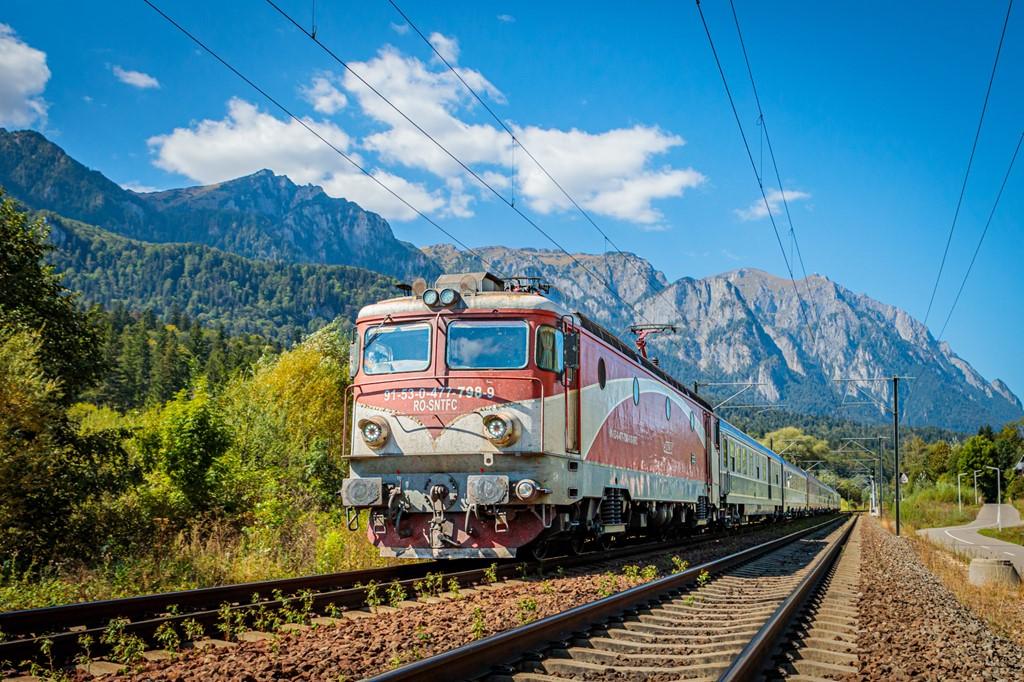
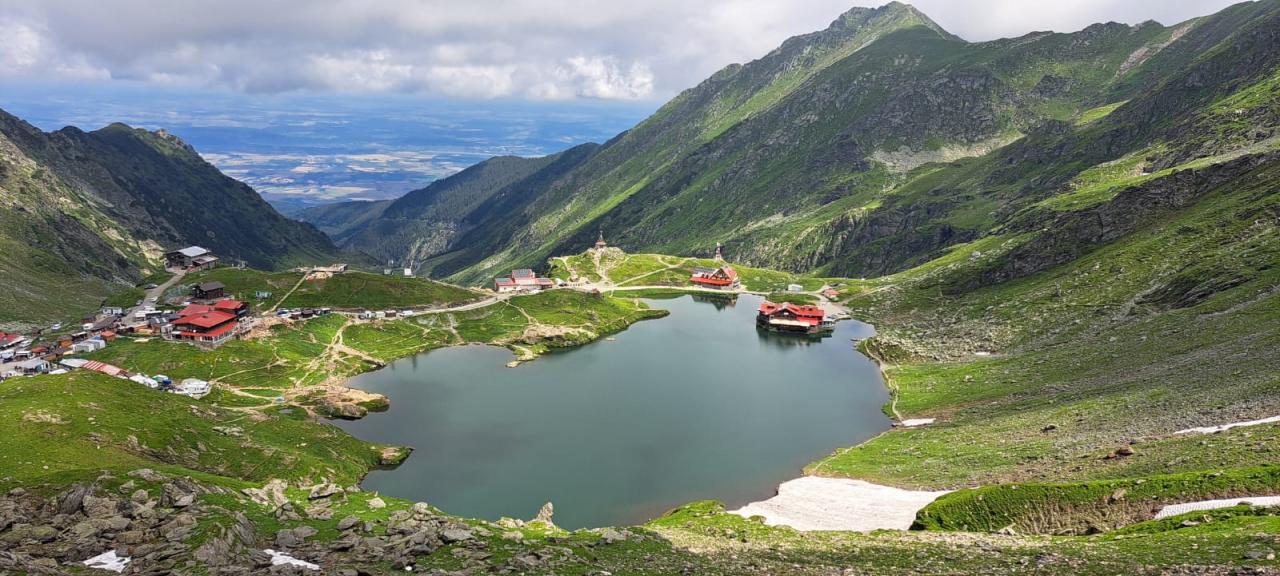
Romania (Romanian: România) is a country of great natural beauty and diversity and a rich cultural heritage, including a variety of ethnic, linguistic, and confessional groups. Romania enchants visitors with its scenic mountain landscapes and unspoilt rural areas, but also with its historic cities and busy capital. There has been significant development, especially since it joined the European Union in 2007. Still, it may surprise some of its visitors who are used to western Europe. It has one natural and six cultural UNESCO world heritage sites.
Romania is a large country which can sometimes be shocking with contrasts: some cities are truly modern, while some villages can seem to have been brought back from the past. While it has significant cultural similarities with other Balkan states, it is regarded as unique due to its strong Latin heritage, reflected in every part of Romanian society from its culture to its language. Things for which Romania is famous include: the Carpathian Mountains, wine, medieval fortresses, Dacia cars, Dracula, stuffed cabbage leaves (sarmale), the Black Sea, sunflower fields, painted monasteries and the Danube Delta.
== Regions ==
== Cities ==
1 Bucharest (București) — the capital of Romania, in which megalomanic monuments, including "House of the People", built during Ceaușescu's reign, overlook medieval neighbourhoods
2 Brașov — in south-eastern Transylvania, its main attractions are the well kept medieval downtown, the nearby luxury resort of Poiana Brașov and the proximity to the Râșnov fortress and the Bran Castle.
3 Cluj-Napoca — the largest town in Transylvania and the second largest Romanian city, a major economic centre and also a very youthful city, as it has one of the largest universities in Europe.
4 Constanța — Romania's main Black Sea port and one of the major commercial hubs in the region. The northernmost district, Mamaia, is one of the best Black Sea resorts.
5 Iași — the 3rd largest Romanian city, it was the...
Source and contributor history · CC BY-SA 4.0 · Shortened from the original; imported automatically without editorial review.