Destination guide
Germany, officially the Federal Republic of Germany, is a country in Western and Central Europe. It lies between the Baltic Sea and the North Sea to the north with the Alps to the south. Its 16 constituent states have a total population of over 83 million, making it the most populous member state of the European Union (EU). Germany borders Denmark to the north; Poland and the Czech Republic to the east; Austria and Switzerland to the south; and France, Luxembourg, Belgium, and the Netherlands to the west. The nation's capital and most populous city is Berlin and its main financial centre is Frankfurt; the largest urban area is the Ruhr.
Settlement in the territory of modern Germany began in the Lower Paleolithic, with various tribes inhabiting it from the Neolithic onward, chiefly the Celts, and Germanic tribes inhabiting the north. Romans named the area Germania. In 962, the Kingdom of Germany formed the bulk of the Holy Roman Empire. During the 16th century, northern German regions became the centre of the Protestant Reformation. Following the Napoleonic Wars and the dissolution of the Holy Roman Empire in 1806, the German Confederation was formed in 1815.
Unification of Germany into the modern nation-state, led by Prussia, established the German Empire in 1871. After World War I and the German revolution, the Empire was replaced by the Weimar Republic. The Nazi rise to power in 1933 led to the establishment of a totalitarian dictatorship under Adolf Hitler, which resulted in World War II and the Holocaust. In 1949, after the war and Allied occupation, Germany was organised into two separate polities with limited sovereignty: the Federal Republic of Germany (FRG), or West Germany, and the German Democratic Republic (GDR), or East Germany. The FRG was a founding...
Source and contributor history: Wikipedia ·
CC BY-SA 4.0 ·
Shortened from the original; imported automatically without editorial review. 2026-11-19 03:26:50 UTC
Places to visit and practical information
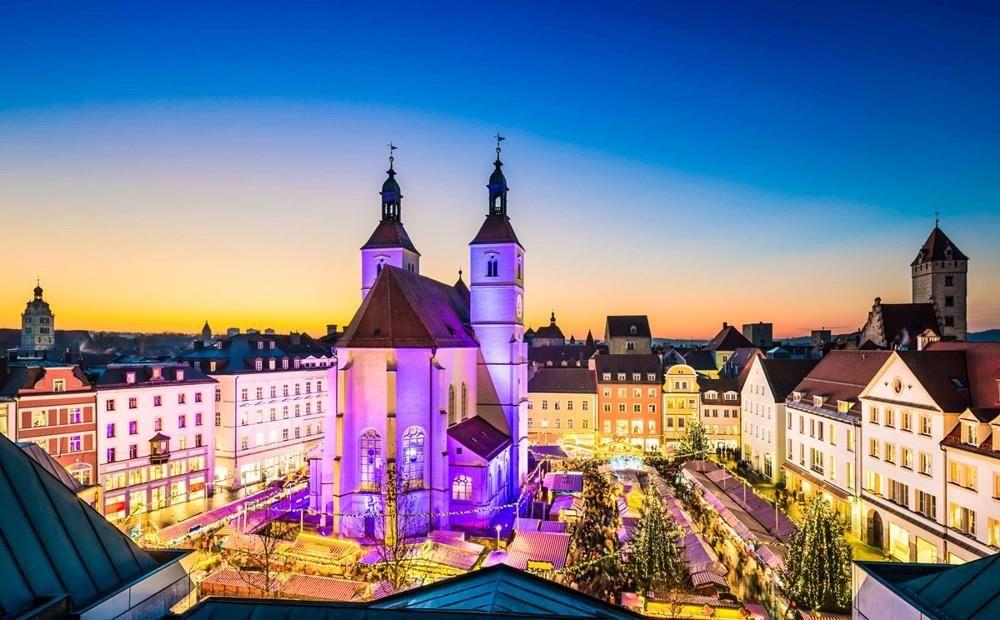
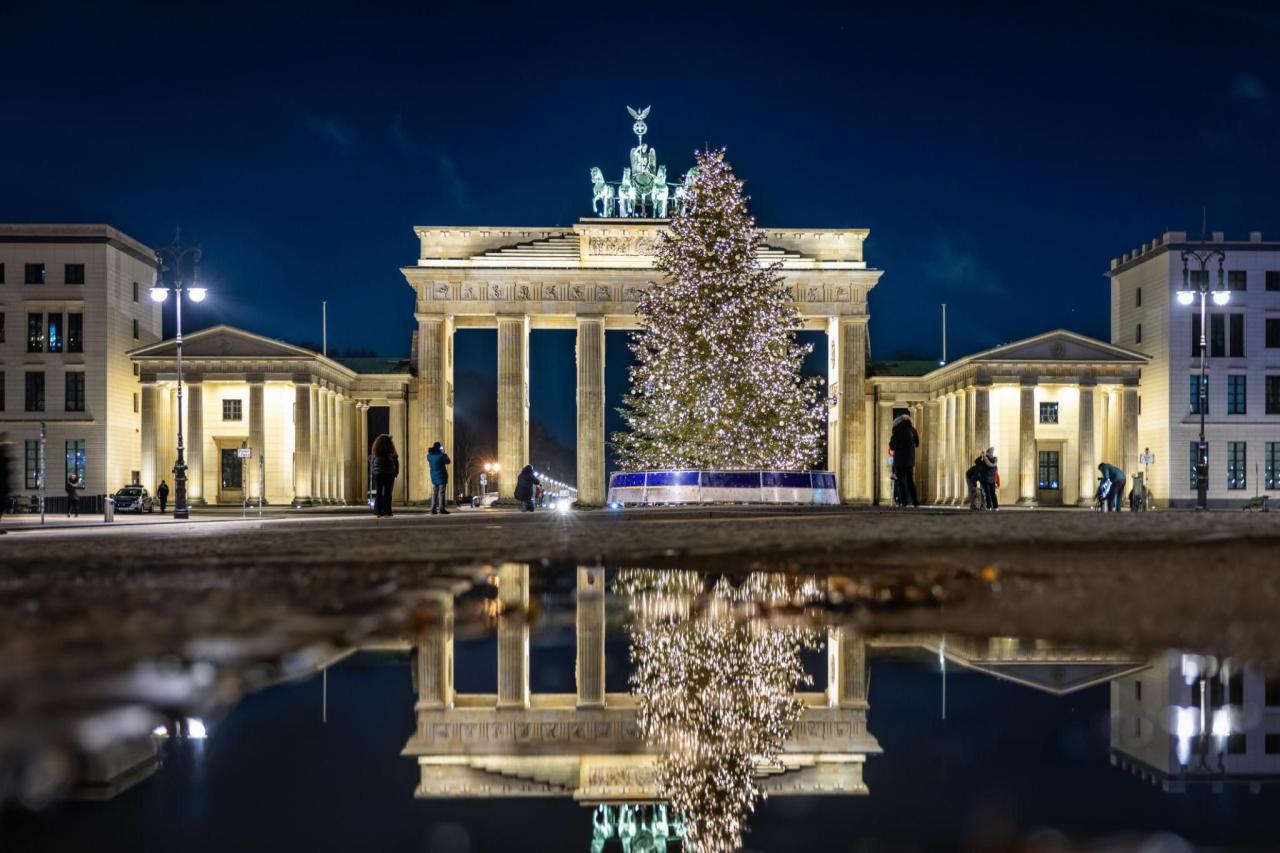
Domestic and international travel and tourism directly contributed over €105.3 billion to German GDP in 2015. Including indirect and induced impacts, the industry supported nearly 4.2 million jobs in 2015. As of 2024, Germany is the seventh-most-visited country. Its most popular landmarks include Cologne Cathedral, the Brandenburg Gate, the Reichstag, the Dresden Frauenkirche, Neuschwanstein Castle, Heidelberg Castle, the Wartburg, and Sanssouci Palace. Europa-Park near Freiburg is Europe's second-most popular theme park resort.
Demographics
With a population of 84.7 million according to the 2023 German census, Germany is the most populous member state of the European Union, the second-most populous country in Europe after Russia, and the nineteenth-most populous country in the world. Its population density stands at 236 inhabitants per square kilometre (610 inhabitants/mi2). The fertility rate of 1.36 children born per woman (2024 estimates) is below the replacement rate of 2.1, but slightly above the EU average of 1.34. Since the 1970s, Germany's death rate has exceeded its birth rate. However, the country is witnessing increased birth and migration rates since the early 2010s. Germany has the fourth oldest population in the world, with an average age of 47.8 years.
Four sizeable groups of people are referred to as national minorities because their ancestors have lived in their respective regions for centuries: There is a Danish minority in the northernmost state of Schleswig-Holstein; the Sorbs, a Slavic population, are in the Lusatia region of Saxony and Brandenburg; the Roma and Sinti live throughout the country; and the Frisians are concentrated in Schleswig-Holstein's western coast and in the north-western part of Lower Saxony.
Germany is a major destination for immigrants, ranking second in the world after the United States. In 2015, following the 2015 refugee crisis, the Population Division of the United Nations Department of Economic and Social Affairs listed Germany as host to the second-highest number of international migrants worldwide, about 5% or 12 million of all 244 million migrants. Refugee crises have resulted in substantial population...
Source and contributor history: Wikipedia ·
CC BY-SA 4.0 ·
Shortened from the original; imported automatically without editorial review. 2026-11-19 03:26:50 UTC
Weather throughout the year
Most of Germany has a temperate climate, ranging from oceanic in the north and west to continental in the east and southeast. A small portion is humid subtropical. Winters range from cold in the Southern Alps to cool and are generally overcast with limited precipitation, while summers can vary from hot and dry to cool and rainy. The northern regions have prevailing westerly winds that bring in moist air from the North Sea, moderating the temperature and increasing precipitation. Conversely, the southeast regions have more extreme temperatures. Climate change in Germany is leading to long-term impacts on agriculture, more intense heat waves and cold waves, flash and coastal flooding, and reduced water availability.
From February 2019–February 2020, average monthly temperatures in Germany ranged from a low of 3.3 °C (37.9 °F) in January 2020 to a high of 19.8 °C (67.6 °F) in June 2019. Average monthly precipitation ranged from 30 litres per square metre in February and April 2019 to 125 litres per square metre in February 2020. Average monthly hours of sunshine ranged from 45 in November 2019 to 300 in June 2019.
Biodiversity
The territory of Germany is divided into five terrestrial ecoregions: Atlantic mixed forests, Baltic mixed forests, Central European mixed forests, Western European broadleaf forests, and Alps conifer and mixed forests. As of 2016, 51% of Germany's land area is devoted to agriculture, while 30% is forested and 14% is covered by settlements or infrastructure.
Plants and animals include those generally common to Central Europe. According to the National Forest Inventory, beeches, oaks, and other deciduous trees constitute just over 40% of Germany's forests; roughly 60% are conifers, particularly spruce and pine. There are many species of ferns, flowers, fungi, and mosses. Wild animals include roe deer, wild boar, mouflon (a subspecies of wild sheep), fox, badger, hare, Eurasian lynx, wolves, alpine ibex, and small numbers of the Eurasian beaver. The blue cornflower was once a German national symbol.
The 16 national parks in Germany include the Jasmund National Park, the Vorpommern Lagoon Area National Park, the Müritz National Park, the...
Source and contributor history: Wikipedia ·
CC BY-SA 4.0 ·
Shortened from the original; imported automatically without editorial review. 2026-11-19 03:26:50 UTC
Planning your trip
An original Dino Travel overview automatically assembled from the stated source data, not a guide translation.
Compare temperatures and rainfall below when choosing your dates. At the Berlin reference point, historical monthly averages put month 1 among the coolest, with a daily high of 2,3 °C, and month 7 among the warmest, at 25,8 °C. These figures describe that point, not a forecast for the whole country. NASA POWER
For a rough comparison, the modelled basic grocery basket in the reference city of Berlin costs 4,067.35 CZK per month, or 135.58 CZK per day divided by thirty (retrieved 2026-11-19). The model may contain estimates and excludes accommodation, restaurants and transport; it is not a total holiday budget. CostCompass
The following individual prices are available for reference; their locations and dates may differ. More items are listed below.
Weather throughout the year
Historical monthly average of daily high temperatures and daily precipitation, not a forecast. NASA POWER data for the stated point; conditions elsewhere can differ.
Symbols indicate freezing mean temperature and precipitation, not sunshine or actual snowfall.
Reference location: Berlin (52.516667, 13.383333)
| Month | Average daily high (°C) | Mean precipitation (mm/day) |
|---|
| 1 | 🌡 2,3 | 💧 1,8 |
|---|
| 2 | 🌡 4,5 | 💧 1,4 |
|---|
| 3 | 🌡 8,8 | 💧 1,3 |
|---|
| 4 | 🌡 14,4 | 💧 1,0 |
|---|
| 5 | 🌡 19,3 | 💧 1,7 |
|---|
| 6 | 🌡 23,9 | 💧 1,9 |
|---|
| 7 | 🌡 25,8 | 💧 2,6 |
|---|
| 8 | 🌡 25,6 | 💧 1,9 |
|---|
| 9 | 🌡 21,3 | 💧 1,6 |
|---|
| 10 | 🌡 14,8 | 💧 1,6 |
|---|
| 11 | 🌡 7,9 | 💧 1,6 |
|---|
| 12 | 🌡 3,4 | 💧 1,6 |
|---|
Berlin · NASA POWER · 25-year Meteorological and Solar Monthly & Annual Climatologies (January 2001 - December 2025) · Average daily high (°C) 2001–2025 · 2026-11-19 03:27:36 UTC
Travel costs
Food and non-alcoholic beverage price comparison for 2024: index 102,7 (EU average = 100). This is a historical price-level comparison, not a grocery basket price, daily budget or current prices.
Eurostat · prc_ppp_ind · 2025-07-10T11:00:00+0200 · Retrieved: 2026-11-19 03:17:28 UTC
Basic grocery basket per day: 135.58 CZK
CostCompass calculates a monthly basket for one person in Berlin at 4,067.35 CZK; we divide by 30 for a daily comparison. The calculation includes estimated or withheld prices; the date is when we retrieved it, not when every price was measured. It is not a full travel budget: lodging, restaurants and transport are excluded. Other places can be cheaper or more expensive.
CostCompass · 2026-11-19 03:28:19 UTC
Detailed observed prices
CostCompass observations for the reference city, not national averages. Names and units are taken from the source.
| Business Shoes (Leather) |
1,347.12 CZK / pair
Berlin · 2026-11-16 · AboutYou & local fashion e-shops
|
|---|
| Jeans (Levis or Similar) |
1,112.85 CZK / item
Berlin · 2026-11-16 · Uniqlo, H&M, AboutYou & local fashion e-shops
|
|---|
| Running Shoes (Nike, Adidas) |
3,429.69 CZK / pair
Berlin · 2026-11-16 · AboutYou & local fashion e-shops
|
|---|
| Summer Dress (Chain Store) |
1,040.62 CZK / item
Berlin · 2026-11-16 · Uniqlo, H&M, AboutYou & local fashion e-shops
|
|---|
| Cinema Ticket |
306.27 CZK / ticket
Berlin · 2026-11-16 · Cinema Ticket Prices
|
|---|
| Fitness Club (Monthly) |
732.57 CZK / month
Berlin · 2026-11-16 · Gym Chains, European Entertainment Chains
|
|---|
| Tennis Court Rent (1 Hour) |
735.01 CZK / hour
Berlin · 2026-11-16 · Tennis Court Hire Prices
|
|---|
| Apples (1kg) |
73.12 CZK / item
Berlin · 2026-11-16 · Knuspr, Wolt Market
|
|---|
| Banana (1kg) |
89.57 CZK / item
Berlin · 2026-11-14 · Knuspr, Wolt Market
|
|---|
| Beef (1kg) |
436.30 CZK / item
Berlin · 2026-11-16 · Knuspr, Wolt Market
|
|---|
| Bread (500g) |
40.01 CZK / item
Berlin · 2026-11-16 · Knuspr, Wolt Market
|
|---|
| Butter (200g) |
50.01 CZK / item
Berlin · 2026-11-16 · Knuspr, Wolt Market
|
|---|
| Canned Tomatoes (400g) |
28.00 CZK / item
Berlin · 2026-11-16 · Knuspr, Wolt Market
|
|---|
| Carrots (1kg) |
22.00 CZK / item
Berlin · 2026-11-14 · Knuspr
|
|---|
| Cheese (1kg) |
218.93 CZK / item
Berlin · 2026-11-16 · Knuspr, Wolt Market
|
|---|
| Chicken Breast (1kg) |
283.38 CZK / item
Berlin · 2026-11-16 · Knuspr, Wolt Market
|
|---|
| Coffee (250g) |
127.58 CZK / item
Berlin · 2026-11-16 · Knuspr, Wolt Market
|
|---|
| Deli Meat / Ham (1kg) |
402.96 CZK / item
Berlin · 2026-11-16 · Knuspr, Wolt Market
|
|---|
| Eggs (12) |
88.90 CZK / item
Berlin · 2026-11-16 · Knuspr, Wolt Market
|
|---|
| Fish Fillet (1kg) |
640.77 CZK / item
Berlin · 2026-11-16 · Knuspr, Wolt Market
|
|---|
| Flour (1kg) |
29.78 CZK / item
Berlin · 2026-11-16 · Knuspr, Wolt Market
|
|---|
| Garlic (1kg) |
184.25 CZK / item
Berlin · 2026-11-16 · Knuspr, Wolt Market
|
|---|
| Orange Juice (1L) |
55.34 CZK / item
Berlin · 2026-11-16 · Knuspr, Wolt Market
|
|---|
| Lentils (1kg) |
110.24 CZK / item
Berlin · 2026-11-16 · Knuspr, Wolt Market
|
|---|
| Lettuce (1 head) |
44.90 CZK / item
Berlin · 2026-11-16 · Knuspr, Wolt Market
|
|---|
| Milk (1 liter) |
35.56 CZK / item
Berlin · 2026-11-16 · Knuspr, Wolt Market
|
|---|
| Oats (500g) |
19.34 CZK / item
Berlin · 2026-11-16 · Knuspr, Wolt Market
|
|---|
| Sunflower Oil (1L) |
75.57 CZK / item
Berlin · 2026-11-16 · Knuspr, Wolt Market
|
|---|
| Onions (1kg) |
42.23 CZK / item
Berlin · 2026-11-16 · Knuspr, Wolt Market
|
|---|
| Oranges (1kg) |
82.46 CZK / item
Berlin · 2026-11-16 · Knuspr, Wolt Market
|
|---|
| Pasta (500g) |
52.01 CZK / item
Berlin · 2026-11-16 · Knuspr, Wolt Market
|
|---|
| Bell Peppers (1kg) |
141.36 CZK / item
Berlin · 2026-11-16 · Knuspr, Wolt Market
|
|---|
| Pork (1kg) |
193.37 CZK / item
Berlin · 2026-11-16 · Knuspr, Wolt Market
|
|---|
| Potatoes (1kg) |
47.79 CZK / item
Berlin · 2026-11-16 · Knuspr, Wolt Market
|
|---|
| Rice (1kg) |
57.79 CZK / item
Berlin · 2026-11-16 · Knuspr, Wolt Market
|
|---|
| Bread Roll (1pc) |
4.89 CZK / item
Berlin · 2026-11-16 · Knuspr, Wolt Market
|
|---|
| Sugar (1kg) |
37.34 CZK / item
Berlin · 2026-11-16 · Knuspr, Wolt Market
|
|---|
| Tomatoes (1kg) |
118.24 CZK / item
Berlin · 2026-11-16 · Knuspr, Wolt Market
|
|---|
| Water (1.5 liter) |
19.11 CZK / item
Berlin · 2026-11-16 · Knuspr, Wolt Market
|
|---|
| Yogurt (150g) |
11.78 CZK / item
Berlin · 2026-11-16 · Knuspr, Wolt Market
|
|---|
| Antibiotics (12 doses) |
411.40 CZK / item
Berlin · 2026-11-16 · Online Pharmacies (API), European Online Pharmacies
|
|---|
| Cold Medicine (6 days) |
25.56 CZK / item
Berlin · 2026-11-16 · Online Pharmacies (API), European Online Pharmacies
|
|---|
| Doctor Visit (15 min) |
952.16 CZK / visit
Berlin · 2026-11-16 · Private Clinics & Telehealth
|
|---|
| 1BR Apartment (city-wide) |
28,637.95 CZK / month
Berlin · 2026-11-16 · Immowelt.de
|
|---|
| 1BR Apartment (Outside Center) |
25,943.27 CZK / month
Berlin · 2026-11-16 · Immowelt.de
|
|---|
| 3BR Apartment (city-wide) |
49,424.57 CZK / month
Berlin · 2026-11-16 · Immowelt.de
|
|---|
| Gasoline (1 liter) |
50.68 CZK / liter
Berlin · 2026-11-16 · EU Weekly Oil Bulletin
|
|---|
| Monthly Transit Pass |
2,768.25 CZK / month
Berlin · 2026-11-16 · City Transit Fares
|
|---|
| One-way Ticket |
98.02 CZK / trip
Berlin · 2026-11-16 · City Transit Fares
|
|---|
| Taxi 1km |
68.68 CZK / km
Berlin · 2026-11-16 · Official Taxi Tariffs
|
|---|
| Taxi Start |
105.35 CZK / trip
Berlin · 2026-11-16 · Official Taxi Tariffs
|
|---|
| Basic Utilities (85m2 Apt) |
8,094.03 CZK / month
Berlin · 2026-11-16 · Eurostat Energy Prices
|
|---|
| Internet (60 Mbps+) |
930.82 CZK / month
Berlin · 2026-11-16 · European Telecom Operators
|
|---|
| Mobile Plan (10GB+) |
367.40 CZK / month
Berlin · 2026-11-16 · European Telecom Operators
|
|---|
CostCompass · CC BY 4.0
Indicative observations: each source specifies a reference city or country. USD as supplied by the sources; prices vary. Some items and further independent sources remain unavailable.
| Item | Price and date |
|---|
| Water 1.5 L |
12.00 CZK Garmisch-Partenkirchen · CostCompass · 2026-11-16 · REWE Abholservice
|
|---|
| Inexpensive restaurant meal |
330.72 CZK Garmisch-Partenkirchen · CostCompass · 2026-11-16 · Venue Menus (per city)
|
|---|
| Cappuccino |
120.02 CZK Garmisch-Partenkirchen · CostCompass · 2026-11-16 · Venue Menus (per city)
|
|---|
| Domestic beer 0.5 L |
129.80 CZK Garmisch-Partenkirchen · CostCompass · 2026-11-16 · Venue Menus (per city)
|
|---|
| Croissant or doughnut |
Unverified |
|---|
| Big Mac |
Unverified |
|---|
| Serving of ice cream |
Unverified |
|---|
The total and local-budget filter require all seven verified prices for the same location and currency; some are missing.
CostCompass · The Economist · CC BY 4.0
A comparable daily per-person budget has not been verified yet. A package price does not indicate local meal, transport and other expenses.
Open the travel guide — Wikivoyage (EN): Accommodation
Germany provides almost all options for accommodation, including hotels, B&Bs, hostels, and camping. You might also consider staying with members of a hospitality exchange network.
German mattresses tend to take a middle ground for firmness, compared to plush American ones and hard Japanese ones. The bedding tends to be simple: a sheet to cover the mattress, one duvet per person (Decke, very nice if you sleep with someone who tends to hog the blankets, but sometimes a little breezy around the toes for tall people) and an enormous square feather pillow, which you can mold into any shape that pleases you. Making the bed in the morning takes mere seconds: fold the Decke in thirds with a quick flick of the wrists, as if it were going to sleep in your place while you are out, and toss the pillow at the top of the bed.
Source and contributor history · CC BY-SA 4.0 · Shortened from the original; imported automatically without editorial review.
Open the travel guide — Wikivoyage (EN): Introduction and places to visit
Germany (German: Deutschland) is the largest country in Central Europe. It is known for its rich cultural heritage, innovative inventions, its old-world charm and Gemütlichkeit (cosiness). Discard any perceptions of Germany as being homogeneous; a country of surprising regional diversity awaits your presence. Many tourists visit Germany to experience European history and the diverse German landscape. German culture, outdoor activities, German holidays and festivities, the countryside and rural areas, and the German cities are identified as being big draws for visitors.
== Regions ==
Officially known as the Federal Republic of Germany (Bundesrepublik Deutschland), Germany has 16 states (called Bundesländer - shortened to Länder) that sometimes correspond to historic regions and sometimes group very different peoples into the same state. Three of these Bundesländer are city-states: Berlin, Bremen and Hamburg. For a long time, the cultural division between north and south was the most notable but, because of the legacy of the Cold War, nowadays the division between east and west is more noticeable.
== Cities ==
Germany has numerous cities of interest to visitors; here are just nine of the most famous travel destinations. They are mostly the larger cities of Germany. Some, such as Berlin and Hamburg, stand like urban islands in more rural landscapes, others, like Düsseldorf and Frankfurt, are part of metropolitan areas together with other cities.
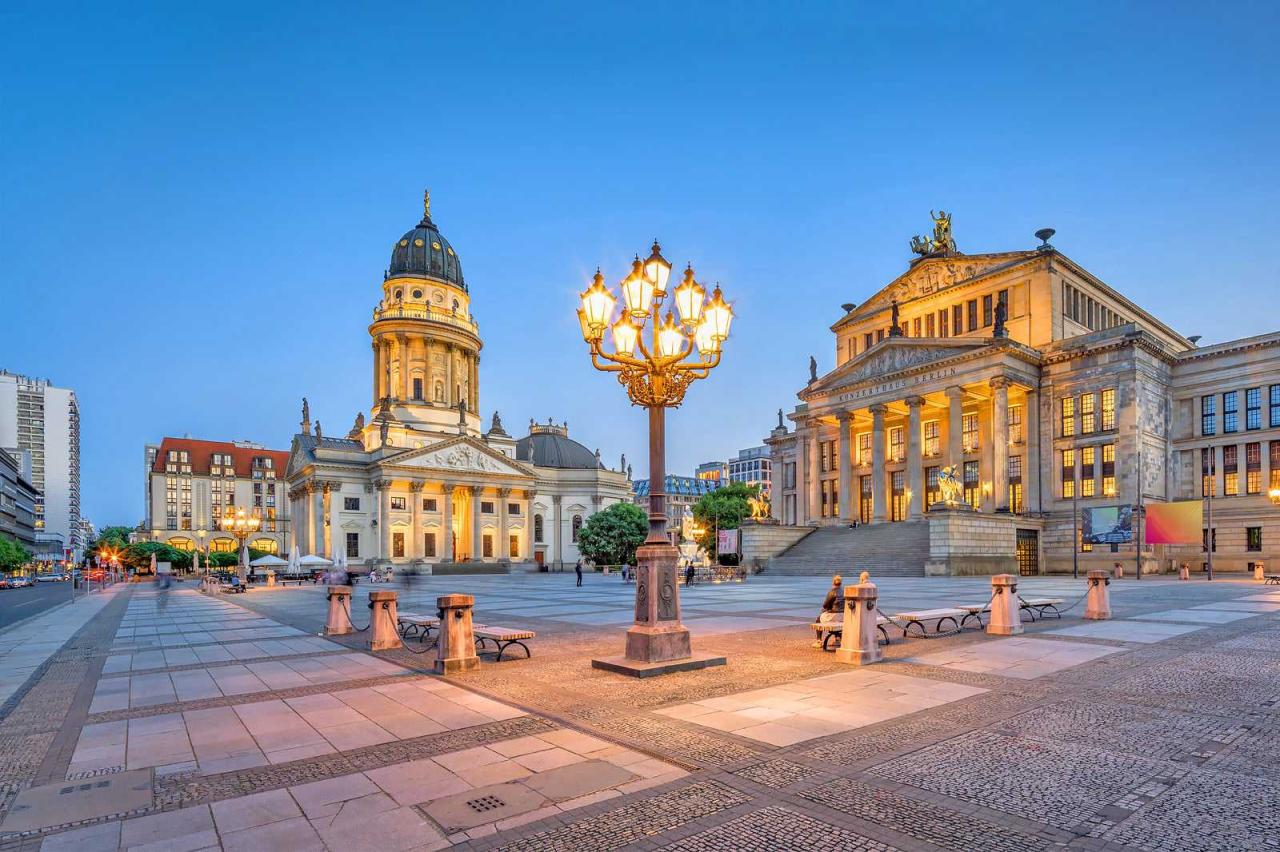
1 Berlin – The reunified and reinvigorated capital of Germany; a metropolis of diversity with some of the world's best-known clubs, shops, galleries and restaurants. As a result of being split in two for decades during the Cold War, Berlin now boasts more opera houses and museums per capita than most other places in the world.
2 Bremen – Its old market, the Schnoor, the Böttcherstrasse, the Viertel and its maritime flair all make Bremen a great urban experience.
3 Cologne (Köln) – Founded by the Romans 2000 years ago and...
Source and contributor history · CC BY-SA 4.0 · Shortened from the original; imported automatically without editorial review.